Start here
Four sets that are cheap, easy to read and hard to regret. If you are buying dice for the first time, or replacing a set you cannot read, the answer is on this list.
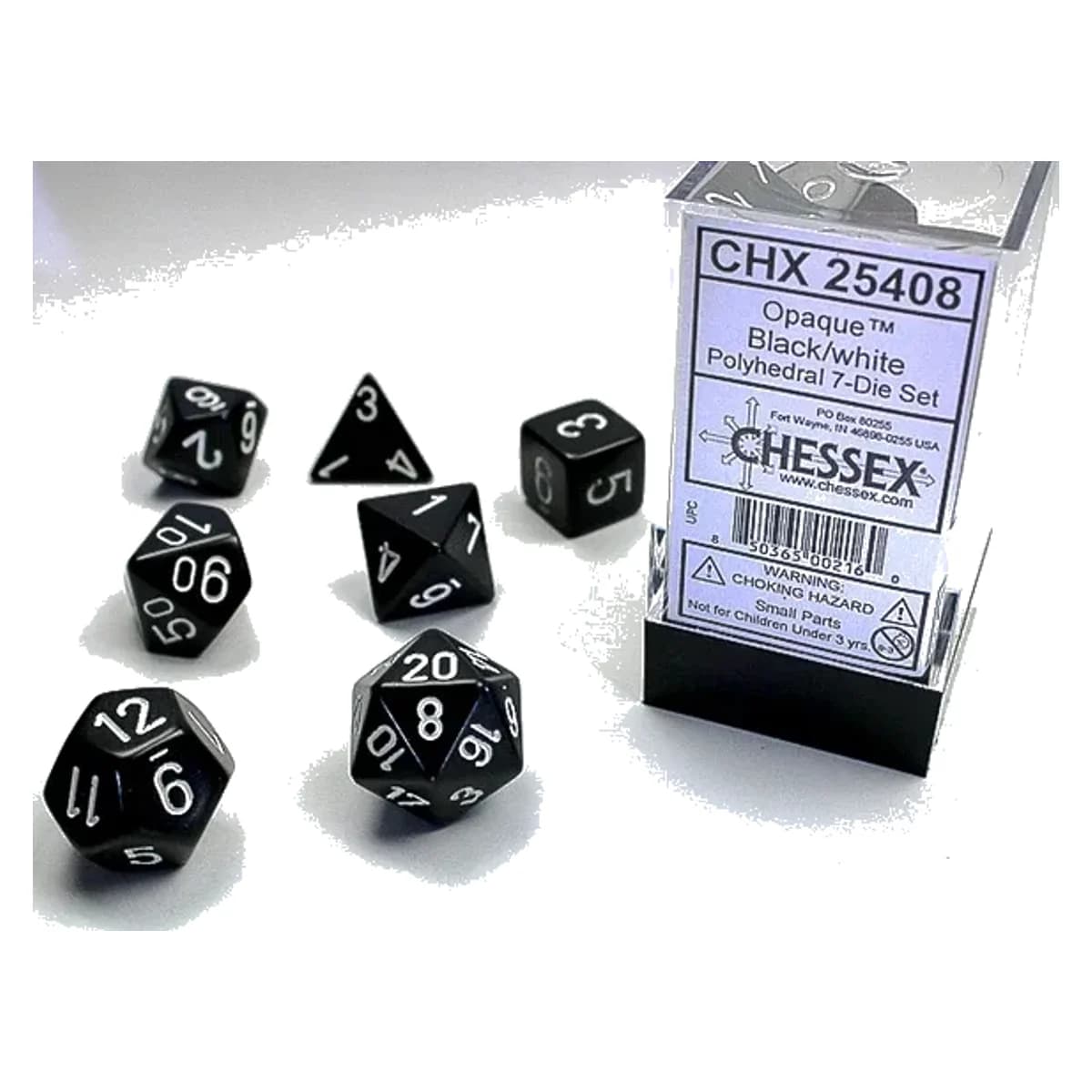
1.Chessex Opaque
Our pick
7 dice
Tumbled edges
Around $8 to $12
The boring answer, and the correct one.
A seven-die set in one solid color with the numbers painted in a second.
Our pick, and the answer a long thread of people arguing about dice keeps collapsing back to. Two flat colors and nothing else is happening on the surface, so the number reads from the far end of the table under bad light. The fancier Chessex lines are prettier and every one of them is harder to read than this.
SuitsAnyone buying a first set, and anyone who has been squinting at a set they bought for the swirls.
The catchQuality control is genuinely uneven, and that is the complaint people repeat about Chessex more than any other. The phrase that comes up is that they are mostly fine with no shortage of janky ones. Buy from a shop that will swap a bad die.
What our tools do hereIf a set of these has you convinced the d20 is out to get you, roll a real one a few hundred times in the Dice Roller and look at the shape of the result. It is lumpier than people expect.
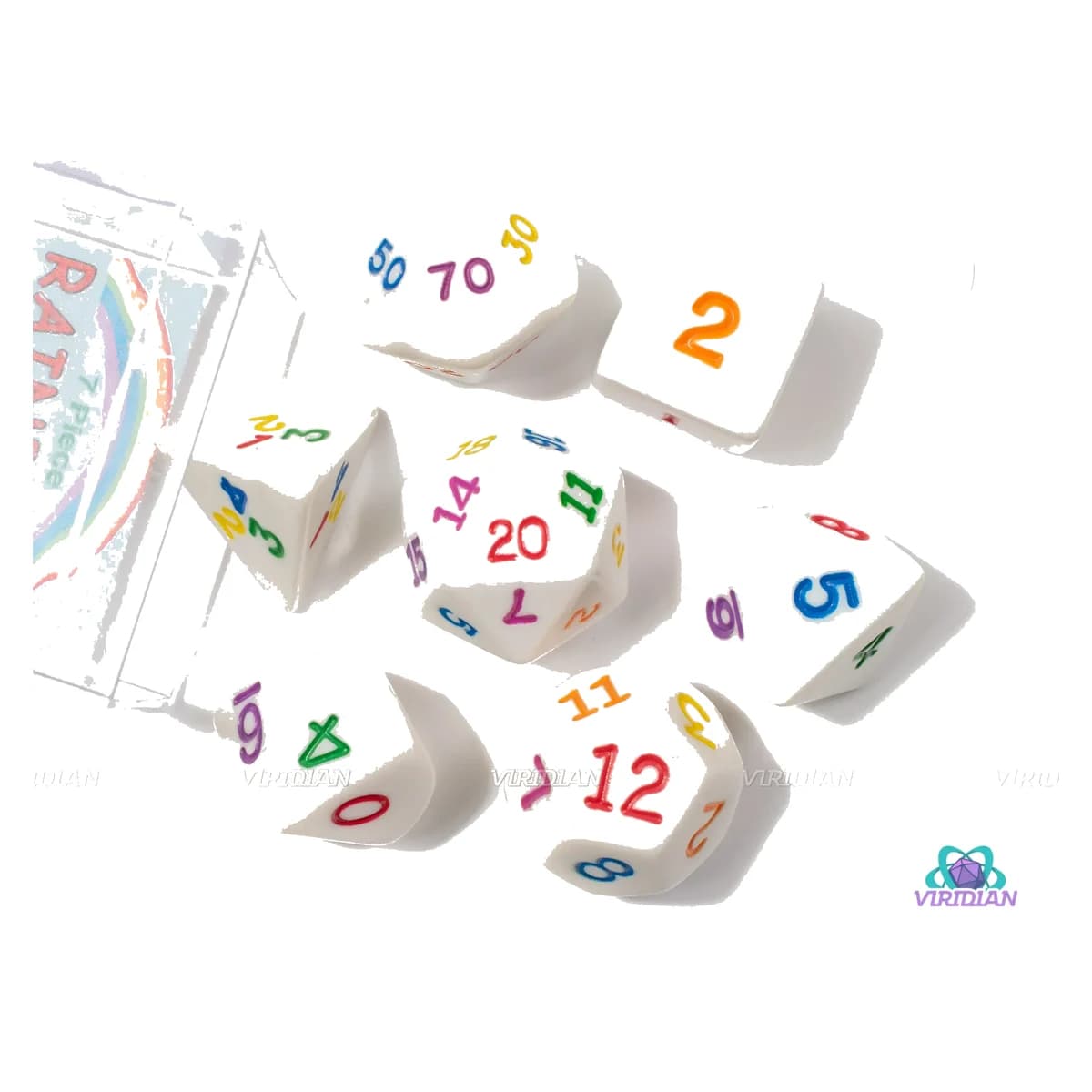
2.Koplow Rainbow
Best cheap set
7 dice
Tumbled edges
Around $6 to $9
The one brand that advertises what it does not sell you.
A seven-die set with each die a different color, made for classrooms and sold to gamers.
Koplow sell into schools, which turns out to be the best thing about them. A teacher handing dice to thirty children needs numbers that read instantly and dice that do not arrive miscast, and Koplow advertise on exactly that: no factory seconds, etched and painted numbers. It is the cheapest set here that we would recommend without a caveat.
SuitsBuying several sets at once, for a table where people keep forgetting their dice.
The catchOne color per die means a group of four all rolling Koplow rainbow sets cannot tell whose d20 is whose. It is a real problem at a shared table and the reason people end up buying matched sets in different colors instead.
What our tools do hereSeven different colors is also seven different dice types, and new players mix up the d10 and the d12 constantly. The Dice Roller shows each type separately, which is a faster way to learn the shapes than being corrected mid-turn.
Koplow list a 1 000-die classroom pack and describe it as containing no factory seconds, which is a direct contrast with the Chessex bulk bag further down this page.
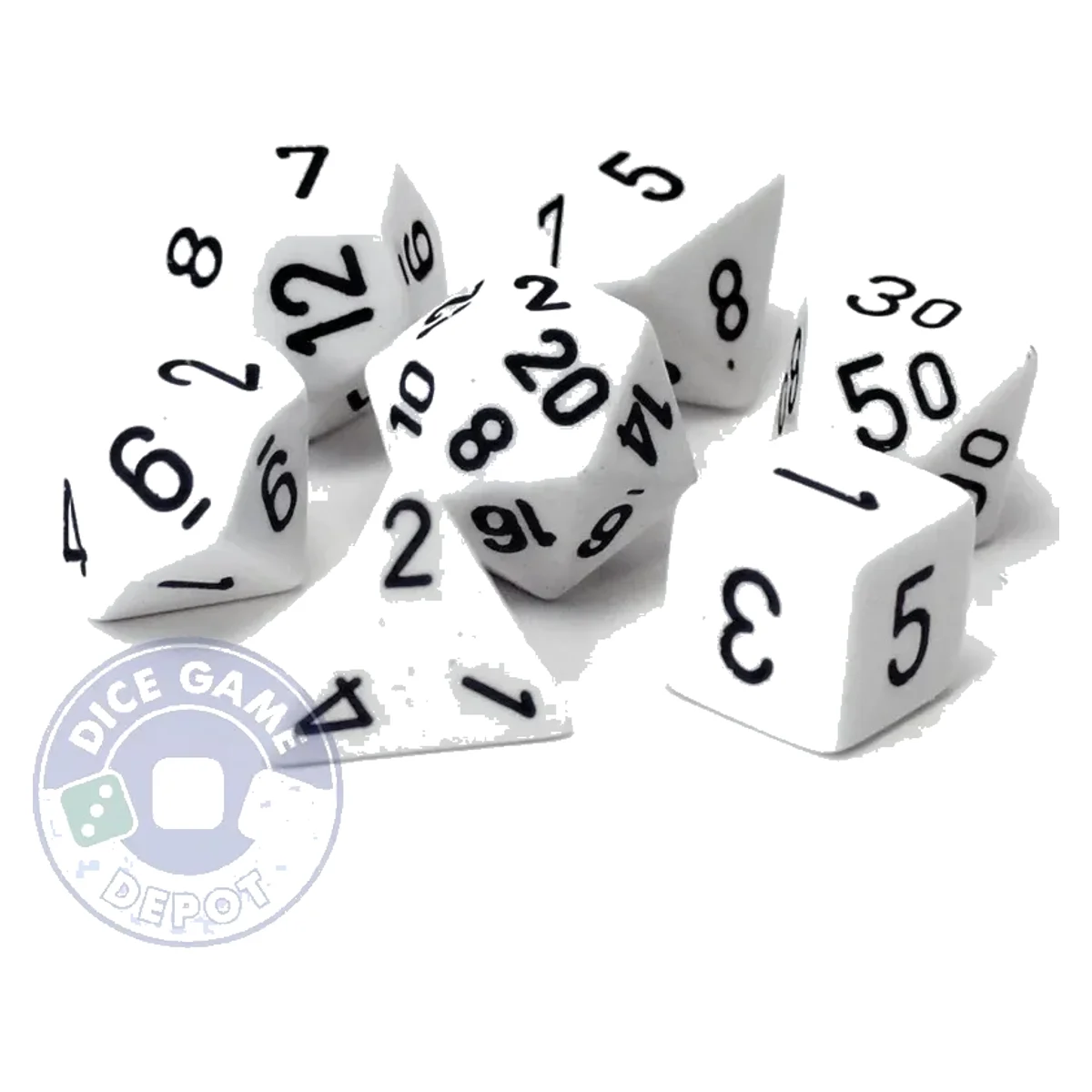
3.Chessex Opaque White
7 dice
Tumbled edges
Around $8 to $12
The most readable die on this page, and it looks like homework.
White plastic, black numbers, nothing else.
The maximum-contrast option, and nobody wants to hear it. Black on white is the most legible combination available and it is what you would choose if a die had to be read across a room. It is also the single least exciting set here, which is why the same people who complain they cannot read their dice will not buy it.
SuitsA dungeon master rolling in front of six people, or anyone whose eyesight has opinions about dim lighting.
The catchIt is plain. That sounds like a taste objection and it is not entirely: dice get bought as a small piece of self-expression, and a set nobody enjoys picking up is a set that stays in the bag.
What our tools do hereThe dungeon master case is also the case for not rolling physical dice at all behind a screen. The Dice Roller does the hidden rolls without the theatre of pretending to look at one.
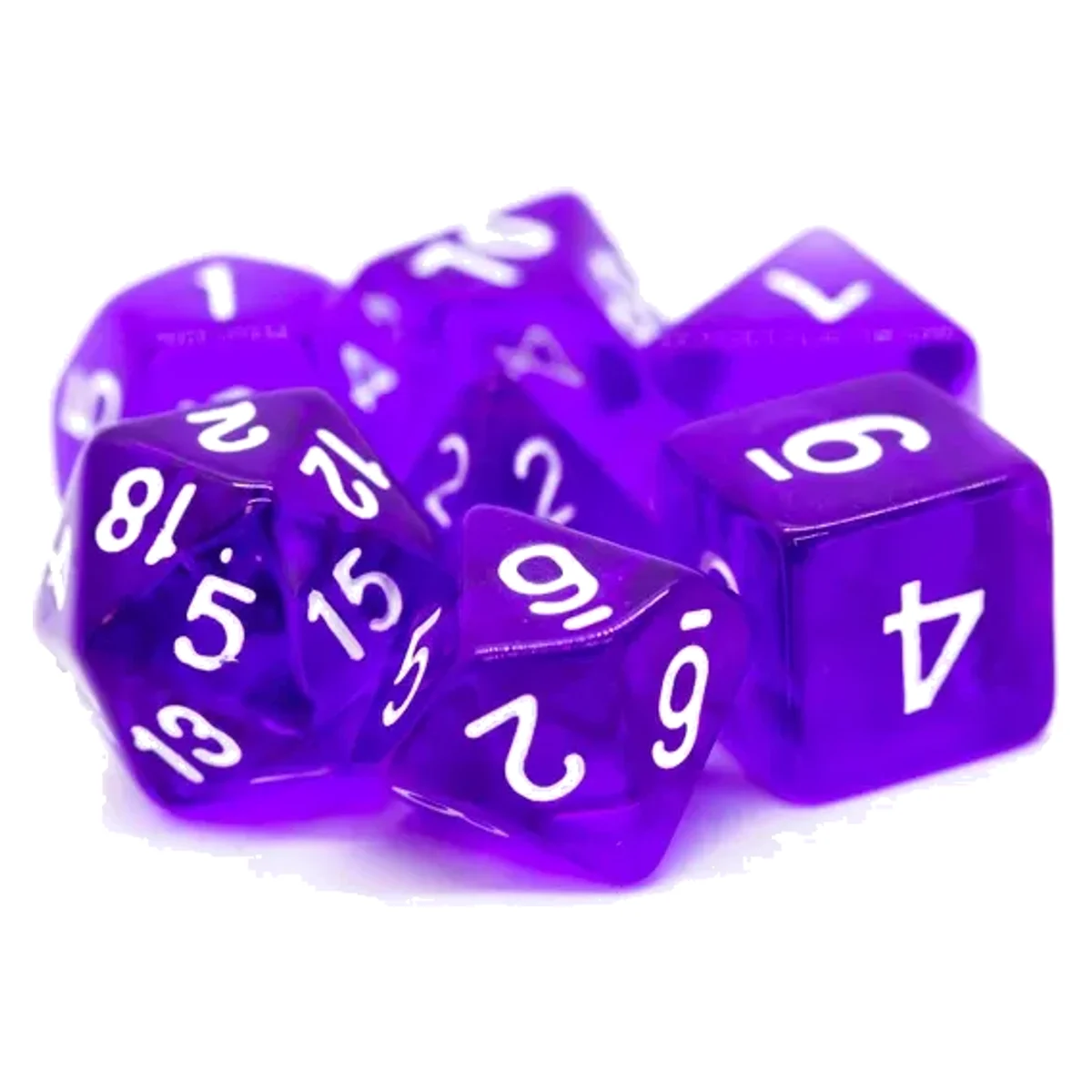
4.CiaraQ acrylic set
7 dice
Tumbled edges
Around $5 to $8
Proof that cheap dice are not the problem people think they are.
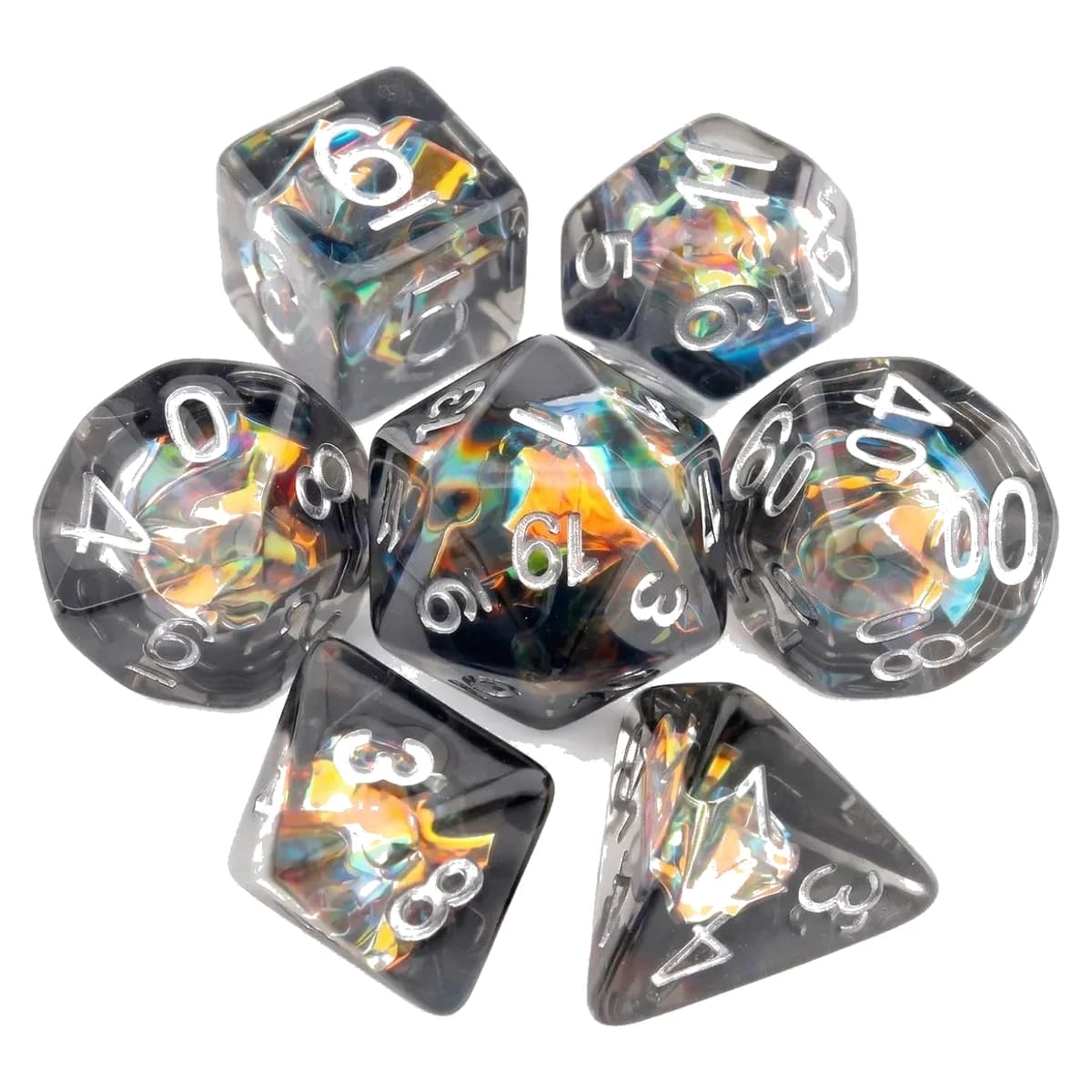
A budget seven-die acrylic set, sold in the dozens on Amazon under a dozen brand names.
Dice at this price are the ones everyone assumes are cheating them, and the evidence does not support it. In one thread a player float-tested cheap sets against a Chessex d20 and it was the Chessex that showed the bias. What you actually risk at this price is cosmetic: a die with messy paint in the numerals, or one obvious casting flaw in a batch of ten sets.
SuitsHanding out to players who turned up without dice, and never getting them back.
The catchThe colorway is a lottery. These listings change supplier without changing the photo, so the set that arrives may not be the set in the picture, and a translucent color with silver numbers is far harder to read than the same set with black.
What our tools do hereThe cheap-dice worry is answerable rather than arguable. Roll a d20 a few hundred times in the Dice Roller and you can see how uneven a genuinely fair result looks, which is usually enough to end the conversation.
When you want more than seven
Five that solve a specific problem rather than being a nicer version of the first four. One of them is the only maker here whose claim is about how the dice roll.
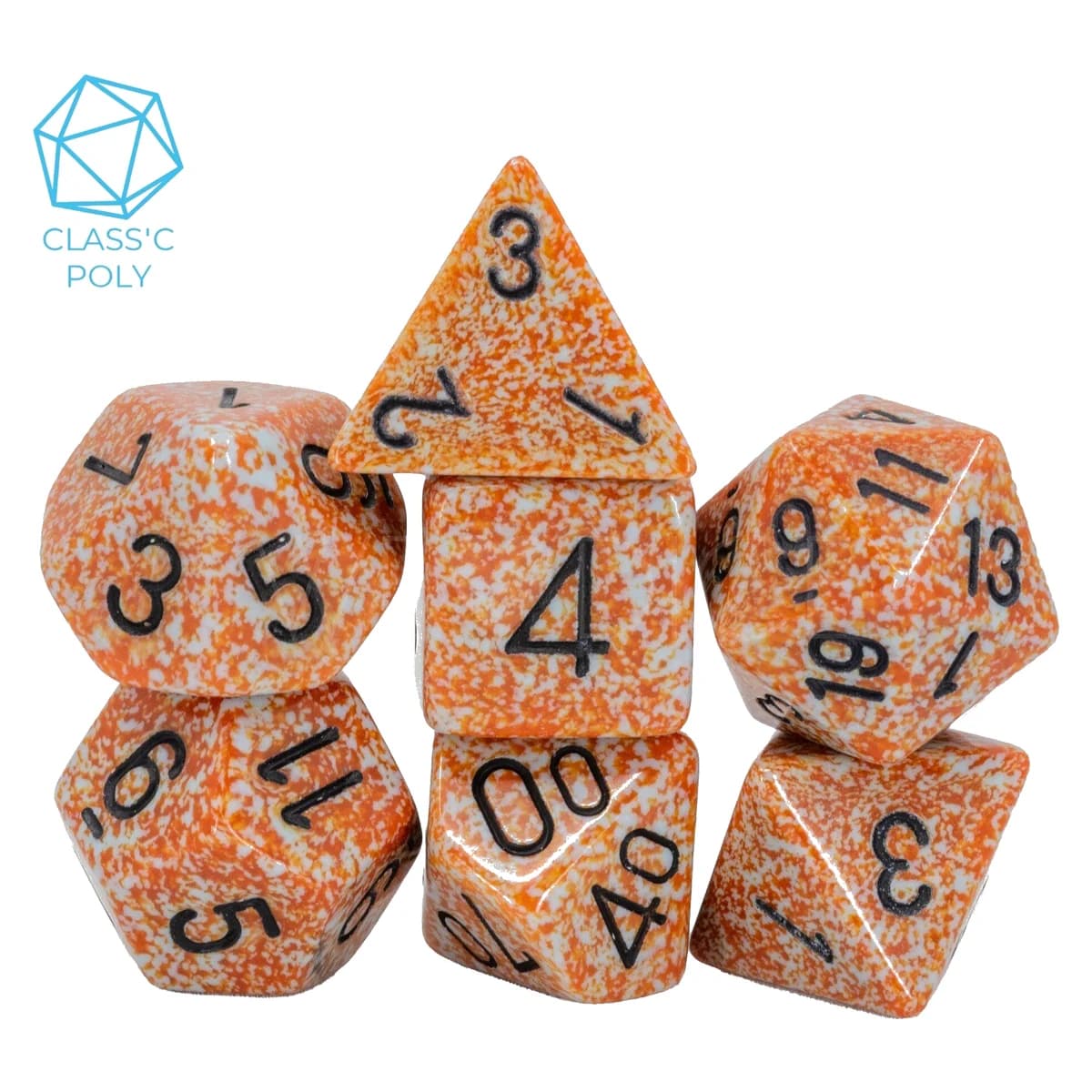
5.Chessex Speckled
7 dice
Tumbled edges
Around $9 to $13
The nicest-looking Chessex line that is still readable.
Solid color flecked with a second, numbers in a third.
Speckled is where Chessex starts being interesting to look at without yet being annoying to read, and it is the line most often recommended by people who own too many dice. The flecks are small enough that the numeral still has a flat field to sit on, which is exactly what the busier lines give up.
SuitsA second set, when the plain one has done its job and you want something with a bit of character.
The catchThe individual colorways vary a lot in how well they work, and the names give you nothing to go on. Some pair a light fleck with a light numeral, and those are hard to read in a way the product photo will not show you.
What our tools do hereWorth knowing before you buy a second set: adding dice does not change your odds. If a run of bad rolls has you shopping, the Dice Roller will show you a worse run inside a minute.
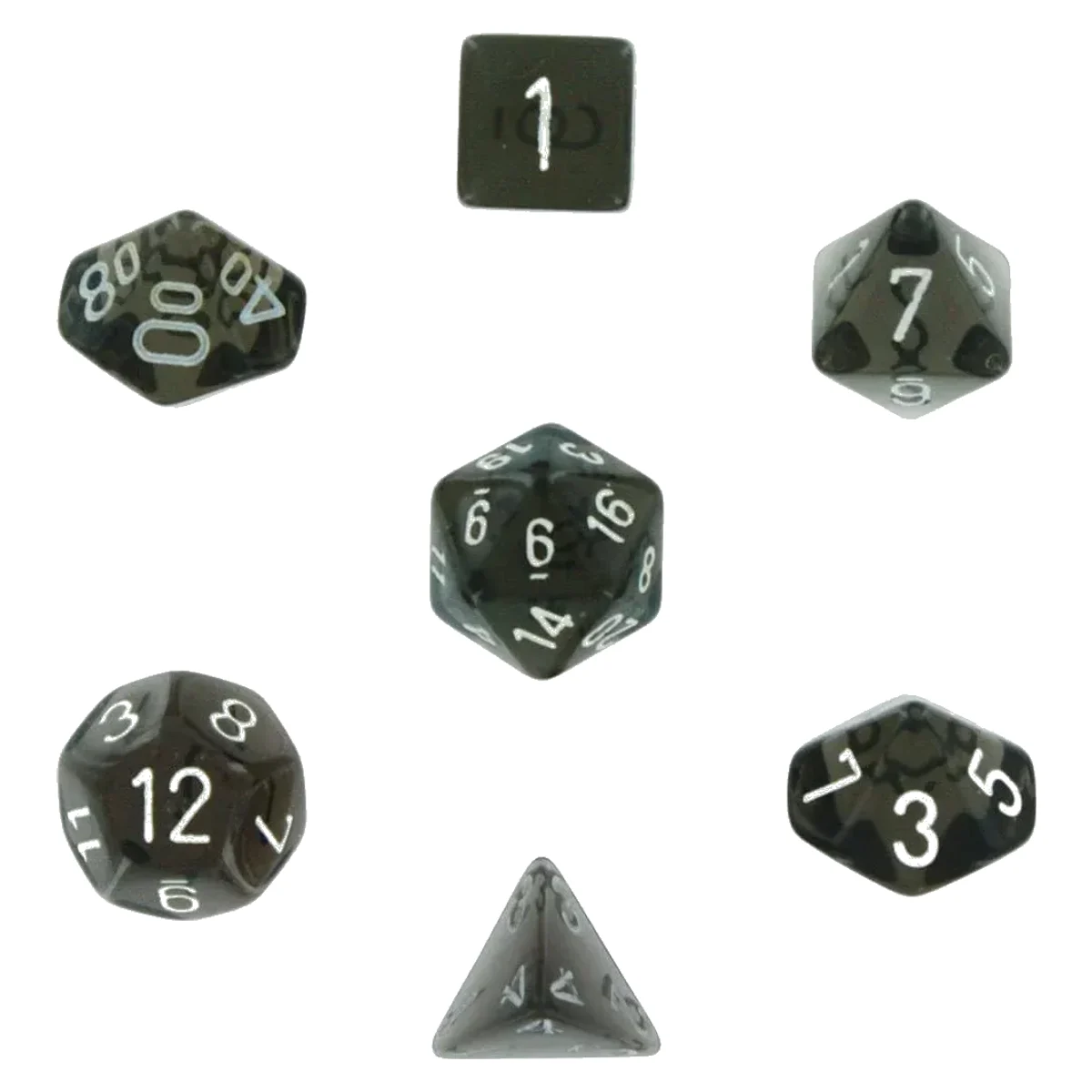
6.Chessex Translucent
7 dice
Tumbled edges
Around $8 to $12
Looks best in the hand and worst on the table.
Clear tinted plastic with painted numbers.
The line people buy first for looks and complain about second. Light passes through the die, so the number you are reading has the opposite face and whatever is under the table showing through behind it. In good light it is fine and genuinely pretty; on a dark wood table at nine in the evening it is work.
SuitsPlaying in bright rooms, or anyone who reads their dice by picking them up anyway.
The catchContrast collapses under poor lighting, which is where most games are actually played. This is the specific failure the buying-guide thread keeps warning about, and translucent sets are the most common example of it.
What our tools do hereContrast is a physical property, not a fairness one. If your dice are hard to read, the fix is different dice, and in the meantime the Dice Roller does not have the problem at all.
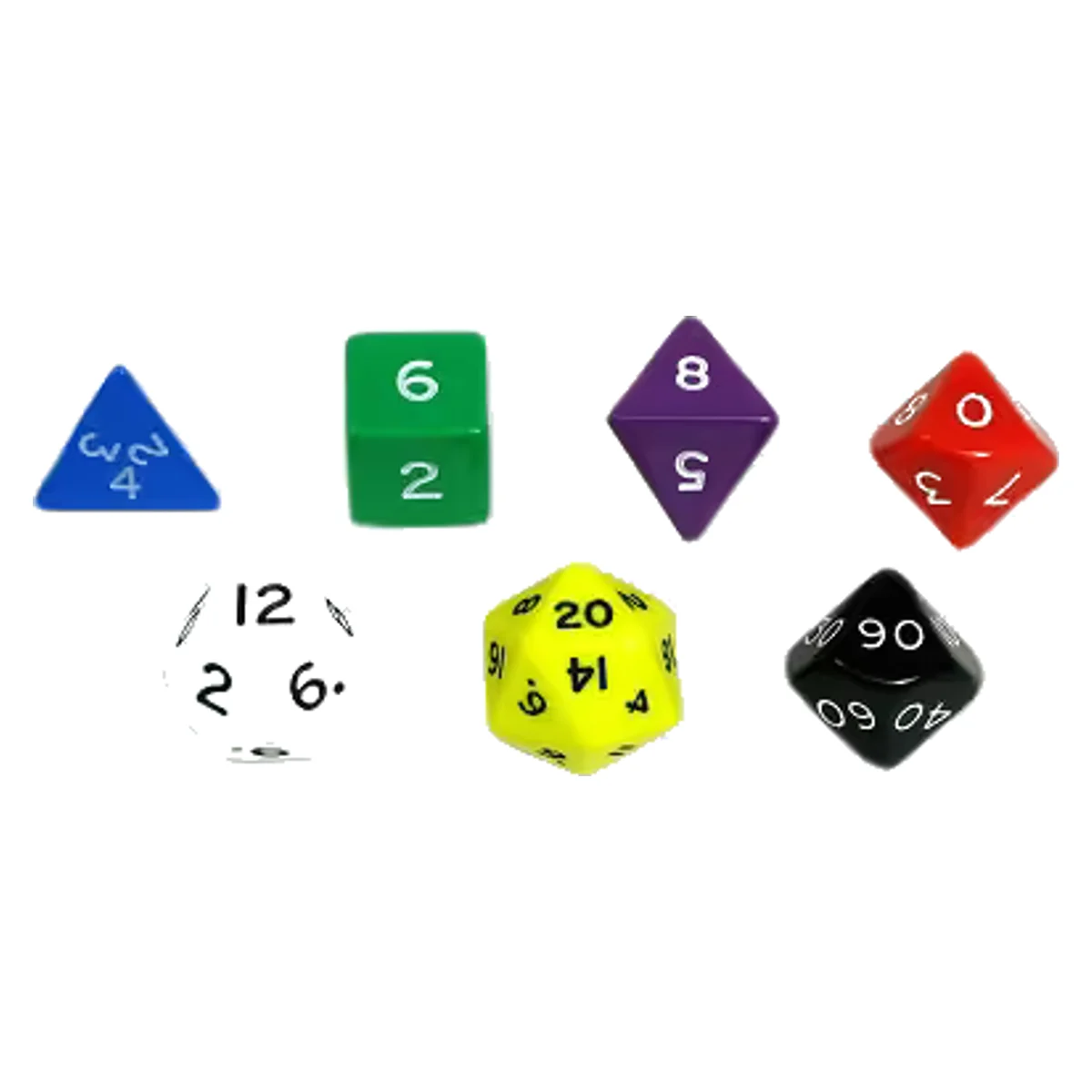
The set to buy when somebody at the table cannot see the numbers.
The same polyhedral shapes at roughly double the usual size.
An accessibility answer that nobody frames as one. Everything the forums say about readability is really about how large the numeral is on your retina, and doubling the die is the crudest and most effective fix available. Also the right buy for a table with a young player who is still learning the shapes.
SuitsAnyone with poor near vision, and any table where the dice are read from a distance.
The catchThey do not fit in a normal dice tray or tower, and a jumbo d20 thrown with any enthusiasm goes off the table. Owners end up rolling them in a box lid, which is not what they had in mind.
What our tools do hereA die you cannot read at all is a solved problem: the Dice Roller shows the result as a number rather than as a shape you have to identify.
8.Gamescience precision dice
The precision claim
7 dice
Sharp edges
Around $15 to $25
The only maker whose claim is mechanical, and the published test did not go their way.
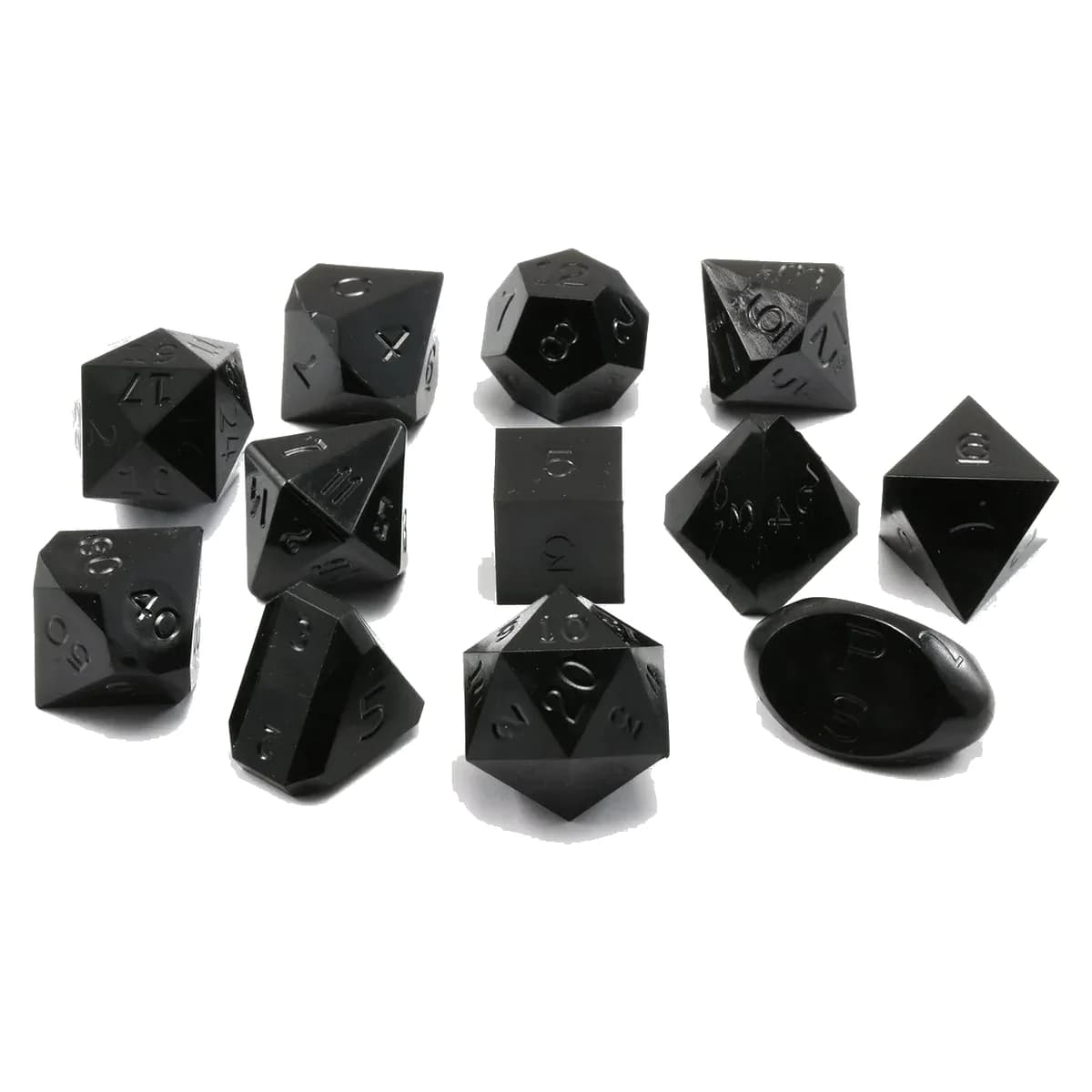
Untumbled dice with the casting flash left on, sold since 1974 on a fairness argument.
Gamescience are the one name here that sells on rolling behavior rather than looks, and they deserve credit for it: sharp edges, no tumbling, and a fifty year argument that rounding a die is what makes it unfair. Then somebody rolled one 10 000 times next to a Chessex and published the counts. Both failed. Gamescience did better overall and had the single worst face in the test, at 295 rolls where 500 was expected.
SuitsAnyone who cares about the argument, and will enjoy owning the dice that make it.
The catchThey ship unfinished. There is a casting nub to cut off with a hobby knife, and unless you pay extra they arrive uninked, meaning you color the numbers in yourself with a crayon or a marker. Owners say it is worth it. It is still an evening of work before you can play.
What our tools do hereThe claim is testable and the test exists. What it needed was a chi-square rather than a rule of thumb, and once you run one, both dice fail and neither failure would ever show up at a table.
Not sold on Amazon. Gamescience sell direct, and Dark Elf Dice carry the range too.
Actual precision dice, for the one shape where precision is achievable.
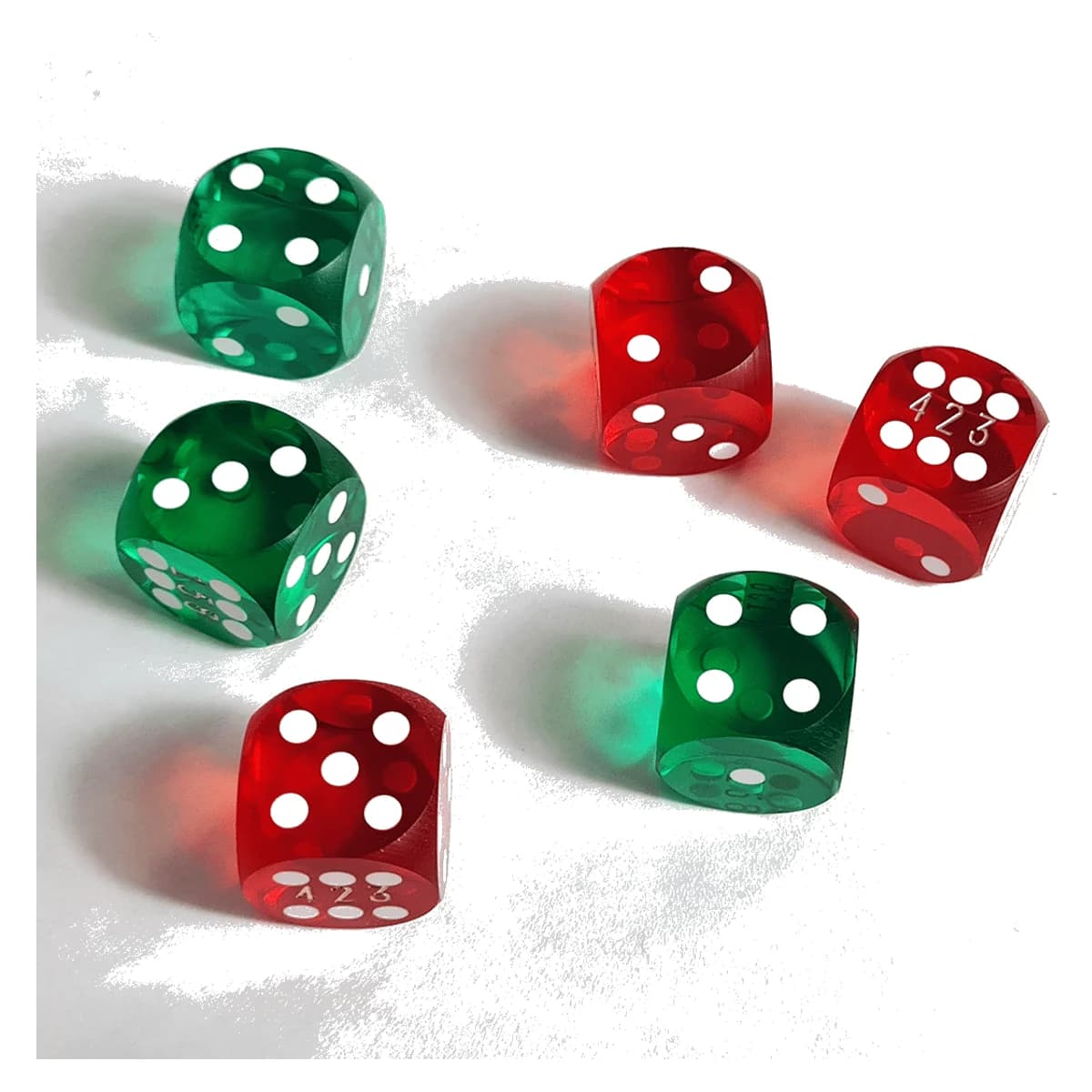
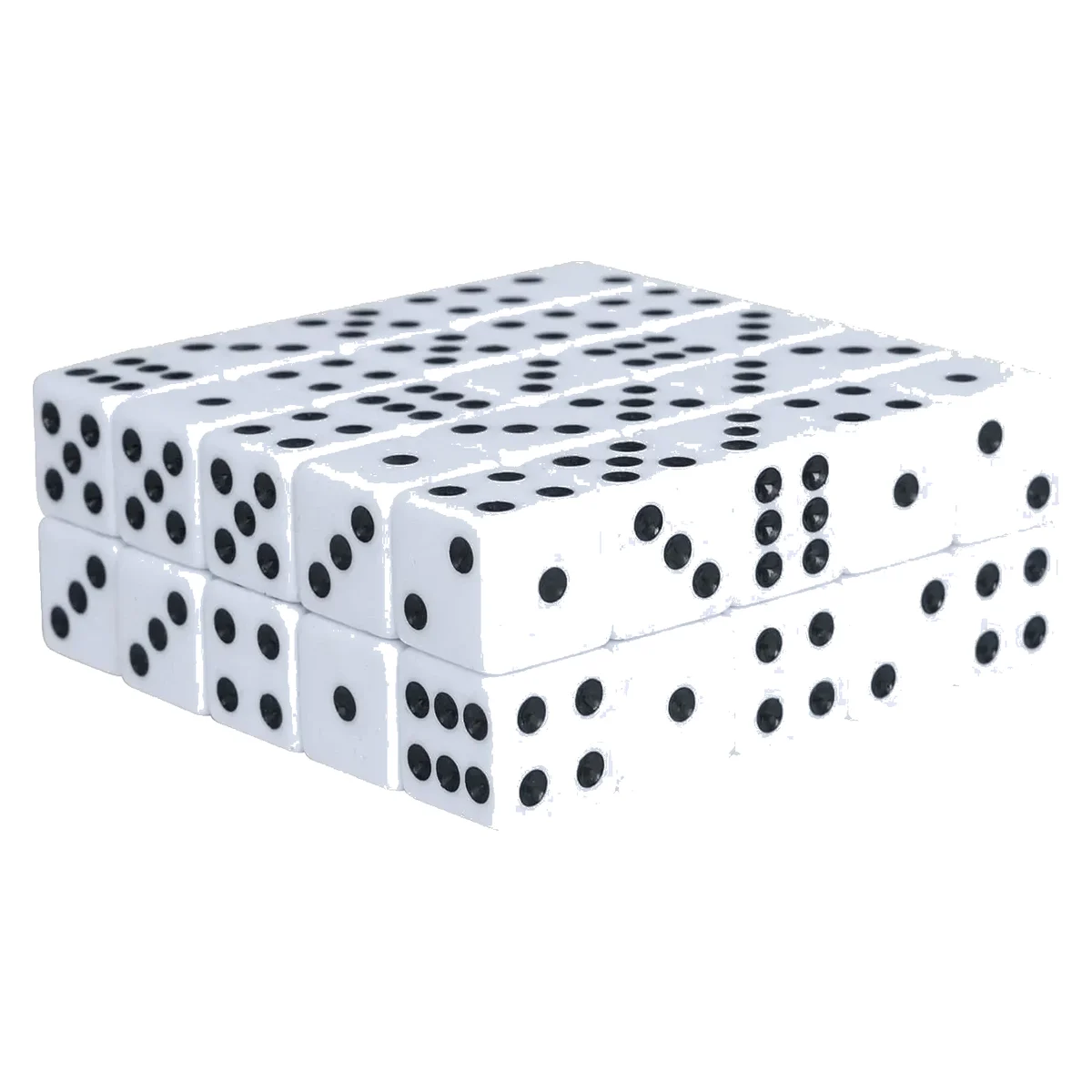
Casino-style six-sided dice, machined square, sold in pairs.
The honest version of the precision argument. A cube is the one polyhedron you can actually machine to a tolerance and check, which is why casinos use them and why the fairness question has a real answer here that it does not have for a d20. If you want dice that are provably close to fair, this is what that looks like, and it is cheap.
SuitsBoard games that use ordinary dice, backgammon, and anyone who wants the argument settled properly.
The catchIt is two dice and they are six-sided, so it does nothing at all for a role-playing table that needs the other six shapes. Sharp casino corners also chip if you roll them across a hard surface, which is why casinos replace them constantly.
What our tools do hereA six-sided die is where the maths is small enough to hold in your head, and where the Dice Roller is genuinely useful: roll two of them a thousand times and the seven-is-most-likely argument stops being a matter of opinion.
Paying for the look
Nine sets where the money buys appearance, and that is a perfectly good reason to spend it. What matters is knowing that is what you are buying, and how much readability each one trades away for it.
10.Chessex Borealis Luminary
Best-looking that still works
7 dice
Tumbled edges
Around $12 to $18
The prettiest set here that we would still play with.
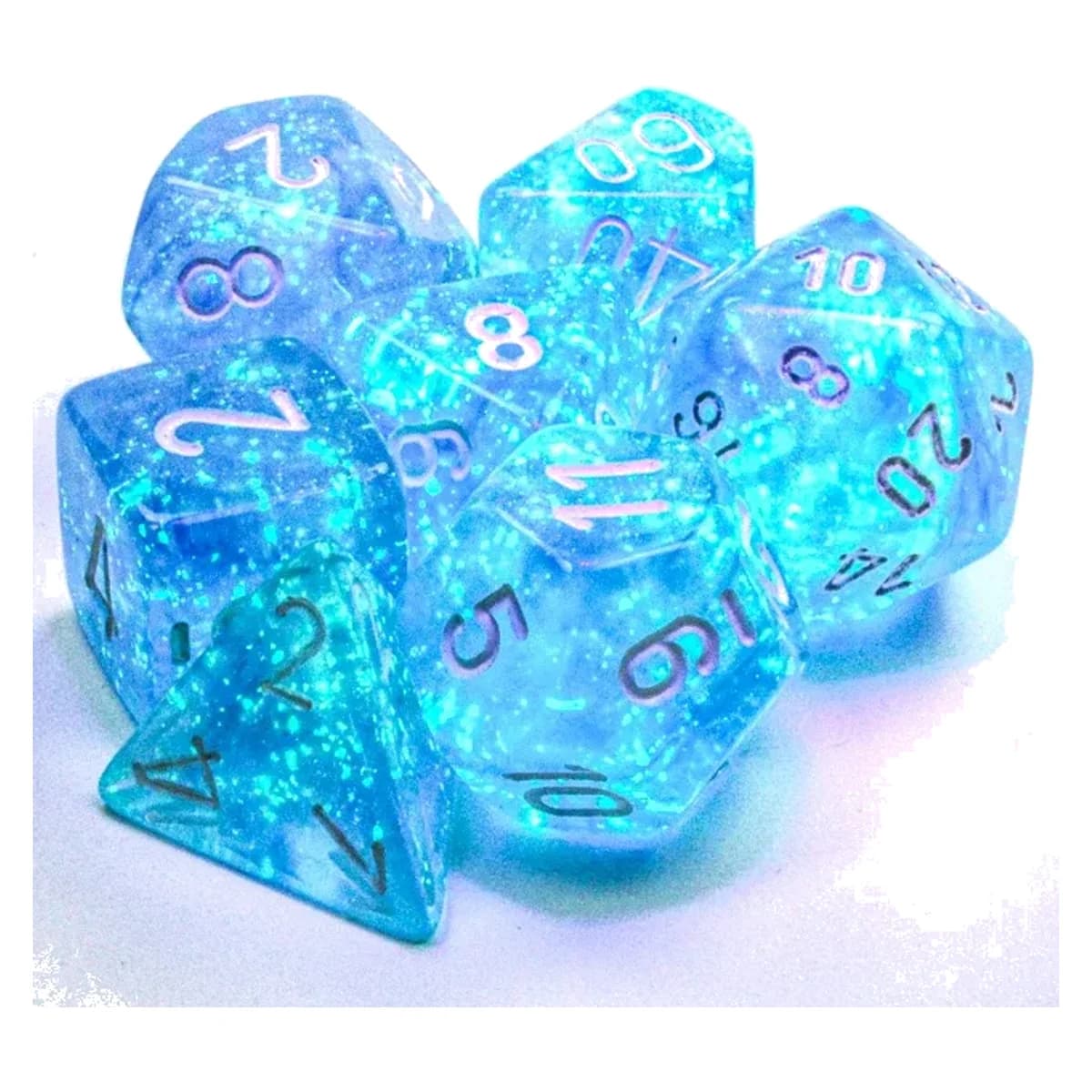
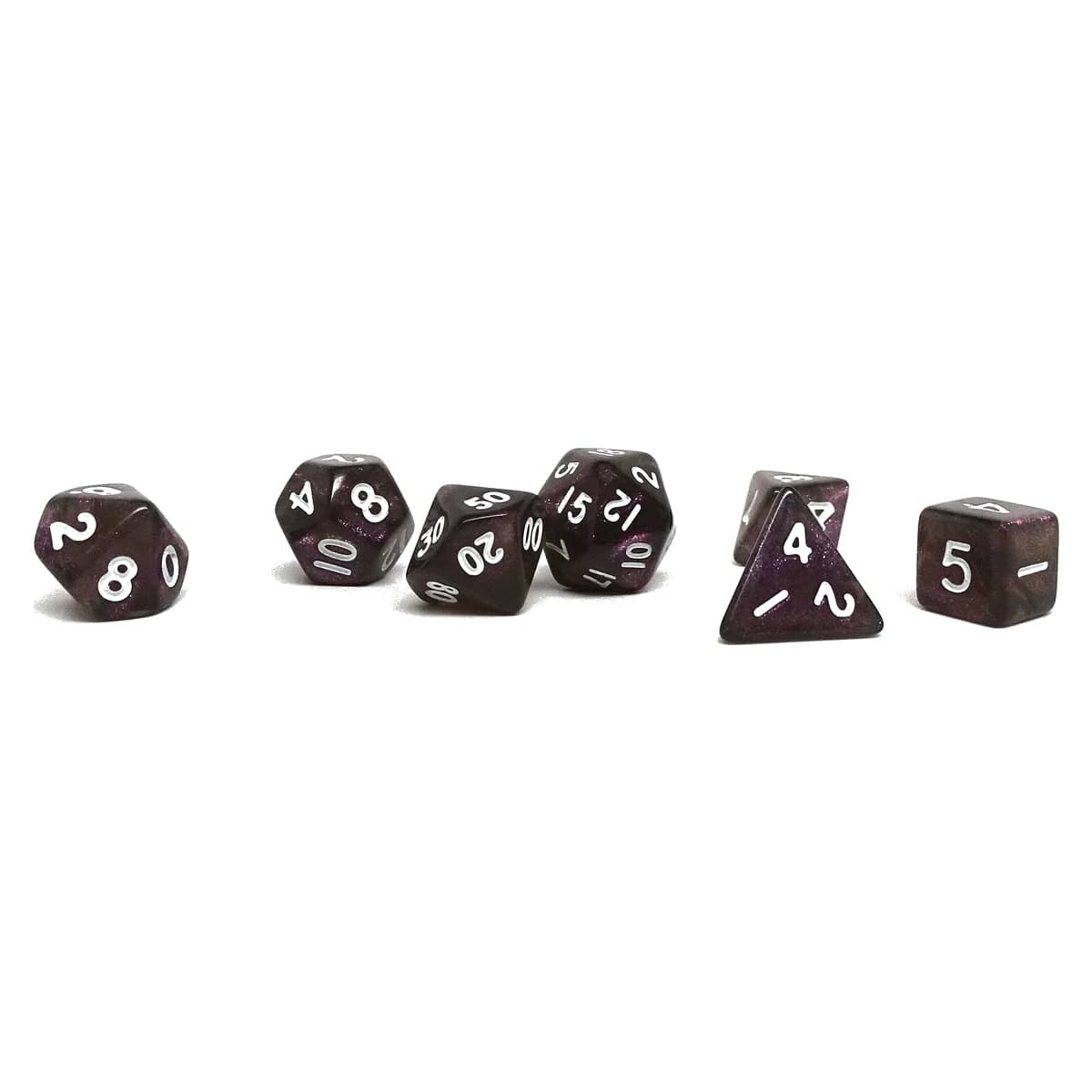
Pearlescent swirl with a glow-in-the-dark base layer, numbers painted in a metallic.
Borealis is the line people name when asked which Chessex dice are beautiful, and it is right at the edge of what stays usable. The good colorways pair a pale swirl with a dark numeral and read fine. The bad ones do the thing the forums warn about: light metallic numbers on a light shifting background, where the numeral competes with the pattern behind it.
SuitsSomebody who wants their dice to be a thing they like looking at and will accept a little extra work.
The catchIt depends entirely on the colorway, and the naming does not tell you which is which. This is one of the few sets here where we would insist on seeing a photo taken by an owner rather than the product shot.
What our tools do hereThe luminary layer is a genuinely nice trick and it is also why the numbers can be hard to pick out. Nothing our tools can fix, though the Dice Roller is what people reach for when the lights are low.
11.AUSTOR sharp edge resin
7 dice
Sharp edges
Around $15 to $25
Sharp edges at a price that does not pretend they are precision.
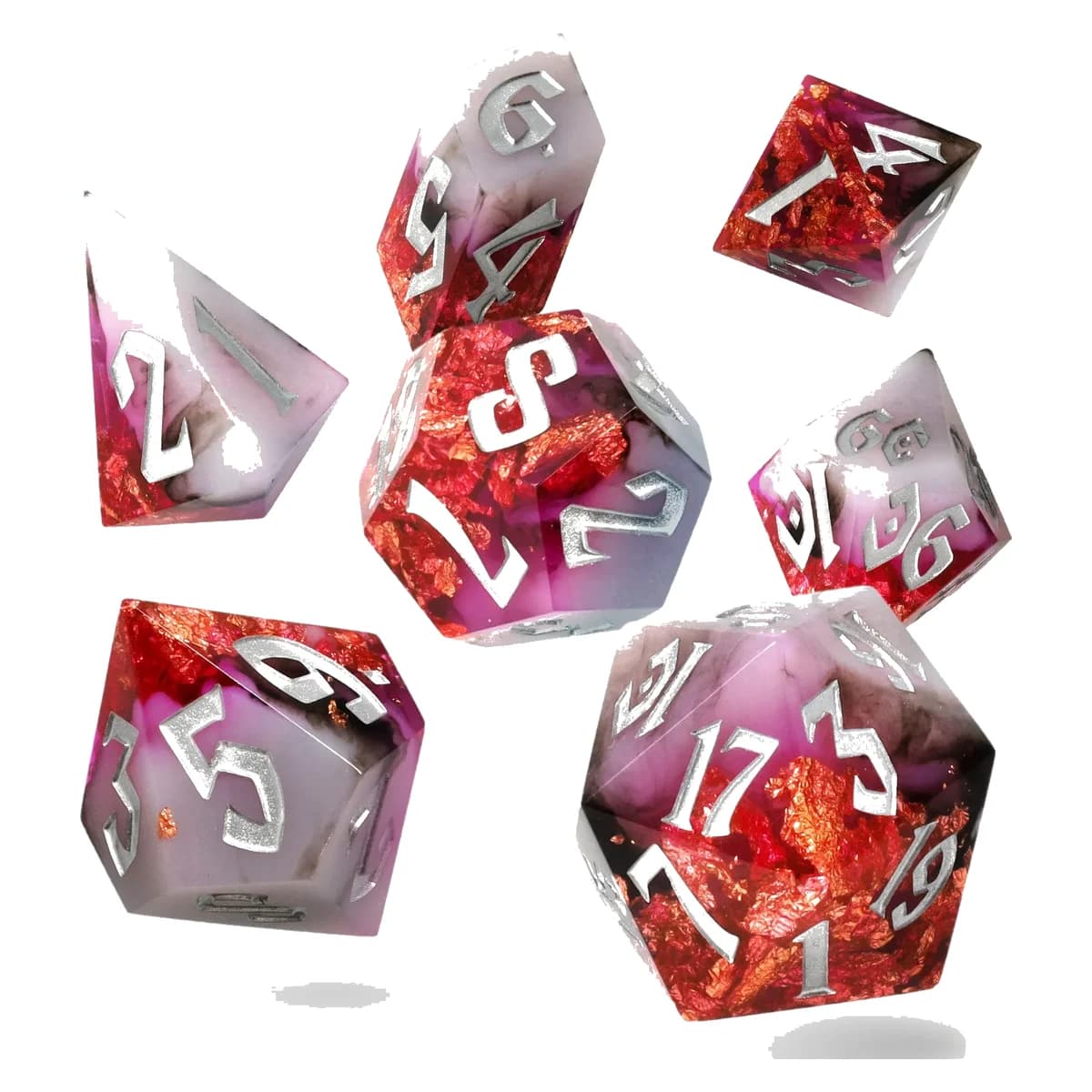
Hand-poured resin with the edges left uncut, in a seven-die set.
Sharp-edge resin is the current fashion and this is the affordable end of it. The edges are the honest part: an untumbled die really does have flatter faces and less rounding, which is the one manufacturing difference that changes anything mechanically. Everything else here is decoration, and the page argues that is fine as long as nobody pretends otherwise.
SuitsWanting the sharp-edge look without paying artisan prices for it.
The catchSharp edges are sharp. They mark soft tabletops, they are less pleasant to shake in a fist, and the corners chip if you roll them onto anything hard. A tray or a mat stops being optional.
What our tools do hereSharp edges are the one change that genuinely affects how a die lands, and the effect is far smaller than the marketing suggests. Rolling a fair d20 a few thousand times in the Dice Roller shows how much noise there is to hide in.
12.Haxtec sharp edge gold flake
7 dice
Sharp edges
Around $20 to $35
Everything a nice resin set is meant to be, including hard to read.
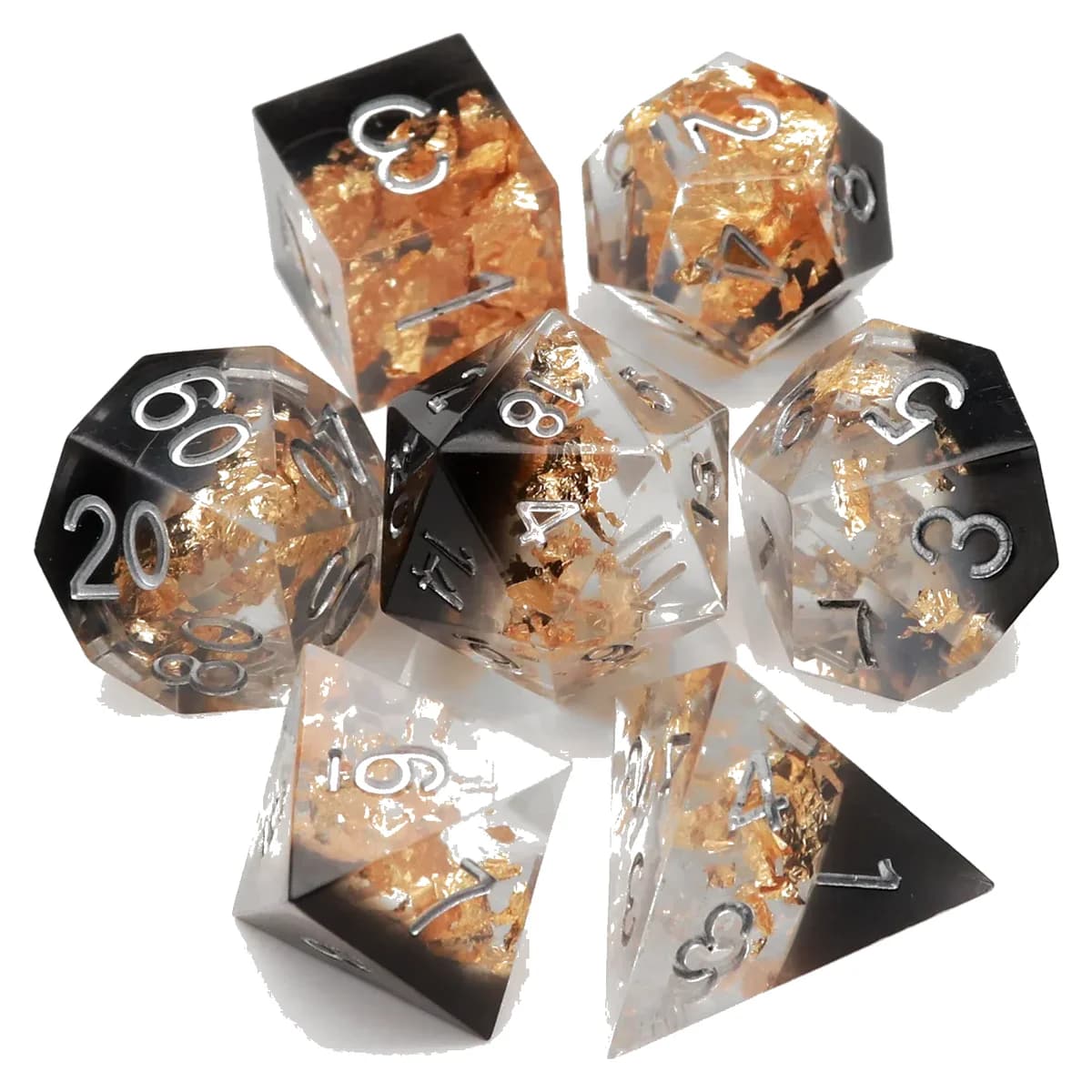
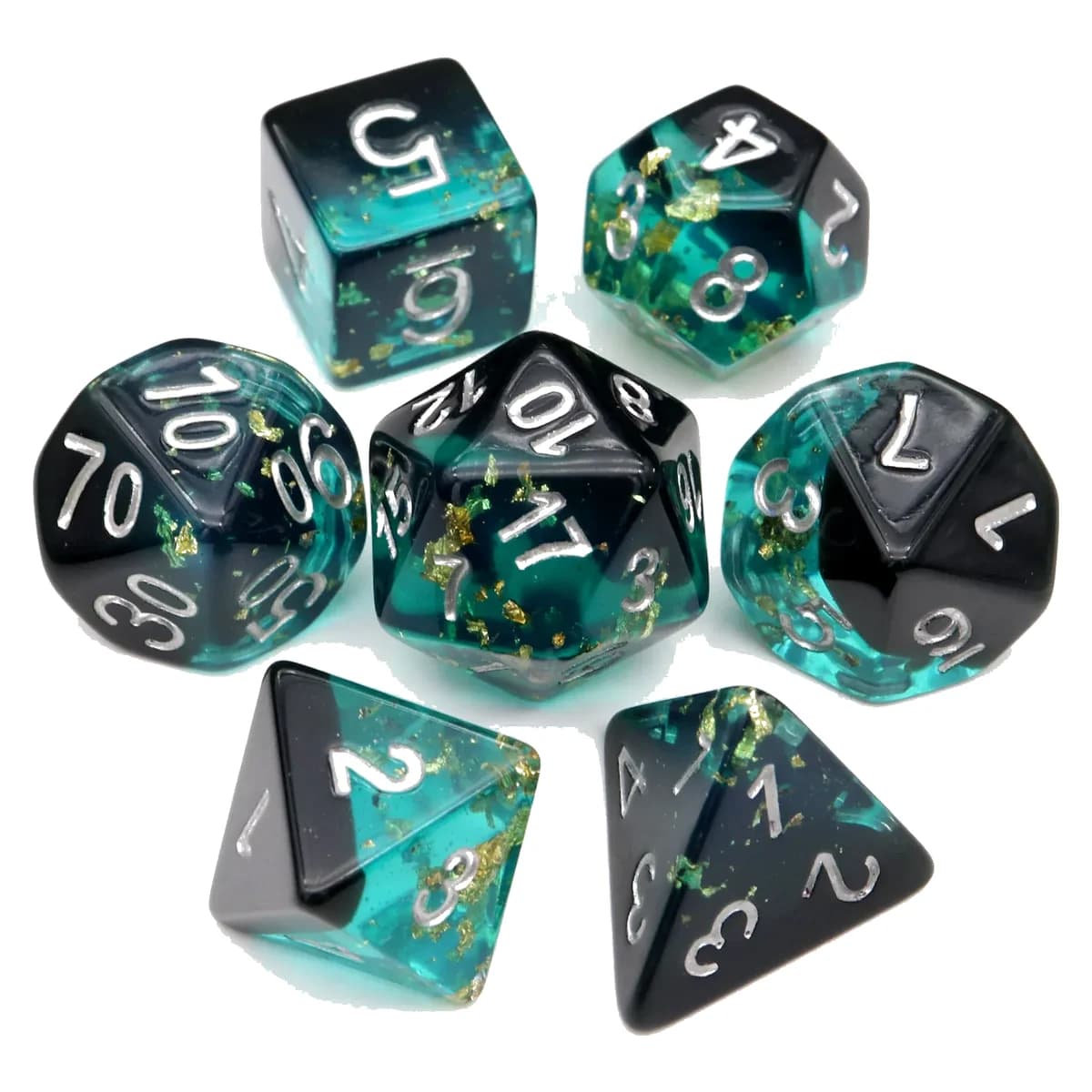
Clear resin with gold flake suspended in it, sharp edges, inked numerals.
This is the set people mean when they say they want nice dice, and it is a good example of the trade the page is about. Suspended flake in clear resin looks extraordinary and puts a field of bright specks directly behind every numeral. You are paying for the look and getting slightly worse dice, and that is a reasonable thing to want.
SuitsA present, or a set for the shelf that occasionally comes out.
The catchThe flake sits behind the numbers. Gold ink over gold flake is the exact failure the community warns about first, and the same set with black ink would be a better die and a less striking object.
What our tools do hereNothing about the flake changes the odds, whatever the price suggests. That claim is checkable rather than arguable, and the Dice Roller is how you check it.
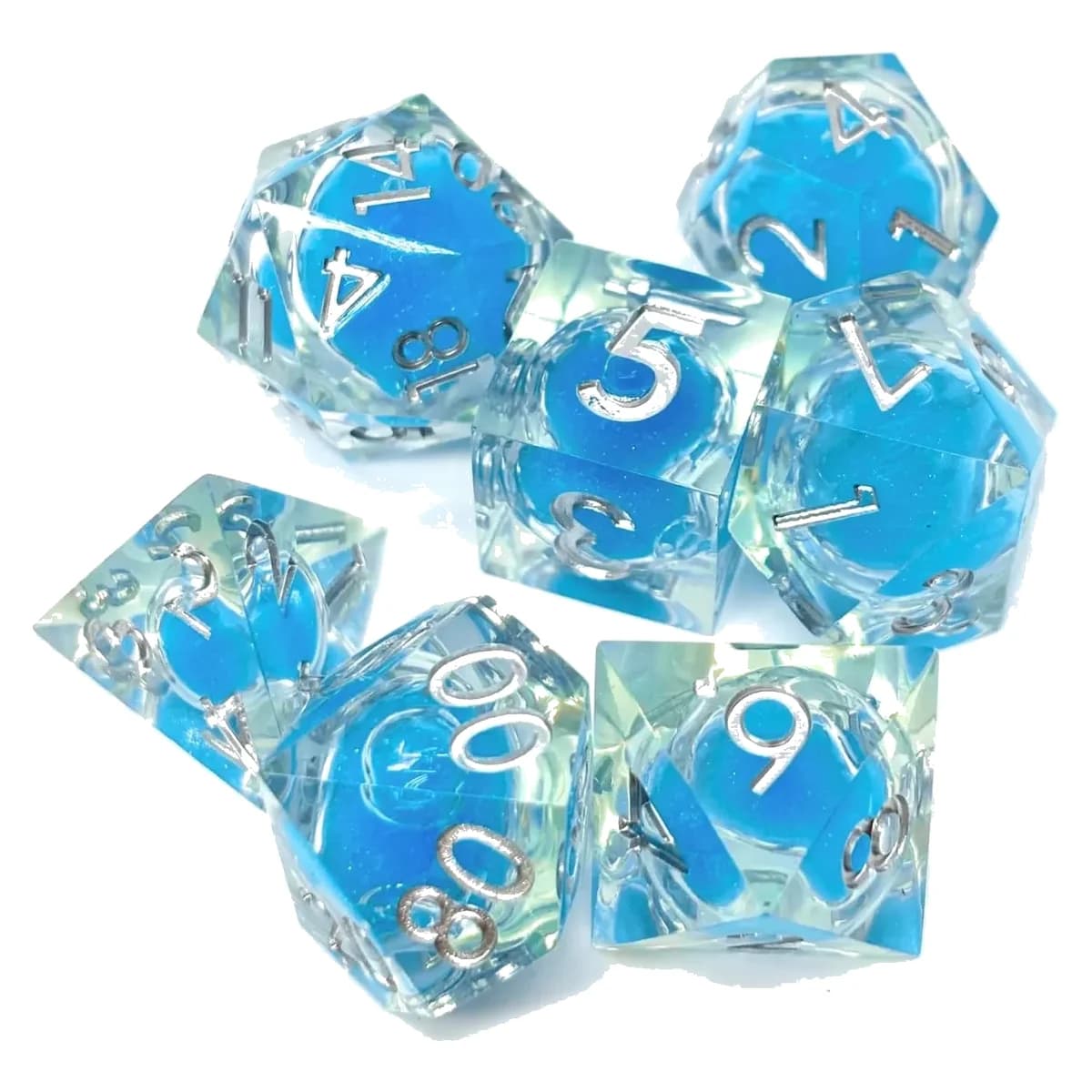
13.Liquid core set
7 dice
Sharp edges
Around $25 to $45
The dice with a bubble in them, and the physics is not the issue.
Sharp-edge resin dice with a sealed cavity of colored liquid inside.
The showpiece of the current dice market and a fair test of whether this page means what it says. A cavity of moving liquid is a real mass asymmetry, and it is also nowhere near large enough to matter at the scale of a game. What should put you off is not the physics but the numerals, which sit over a moving colored void.
SuitsSomebody who wants the die itself to be part of the fun of the turn.
The catchThe seal is a failure point nothing else here has. Owners report leaks and bubbles that grow, and a die whose insides shift is not a die that lasts a decade in a bag the way plastic does.
What our tools do hereWorth stating plainly: an internal cavity is exactly the kind of imbalance a float test can find, and exactly the kind that vanishes in play. Roll a d20 ten thousand times in the Dice Roller and even a ten percent bias is invisible.
14.Haxtec resin set
7 dice
Tumbled edges
Around $12 to $20
The value pick among the pretty ones.
Tumbled resin with a solid or lightly marbled color and inked numbers.
Haxtec occupy a useful gap: nicer than the bulk sets, far cheaper than the boutique makers, and mostly sensible about contrast. The solid-color sets in this range are the ones to look at, and they do the thing the expensive resin sets often forget, which is to put a dark numeral on a light face.
SuitsA first step up from a plain plastic set without spending forty dollars.
The catchThe range is enormous and the quality across it is not even. Haxtec sell dozens of lines under one name, and a review of one set tells you very little about another.
What our tools do hereA step up in price buys a nicer object. It does not buy better rolls, which is checkable in a minute with the Dice Roller and is the single most useful thing to know before spending more.
15.Q Workshop Classic
7 dice
Tumbled edges
Around $15 to $22
The plain line from the maker whose other dice you cannot read.
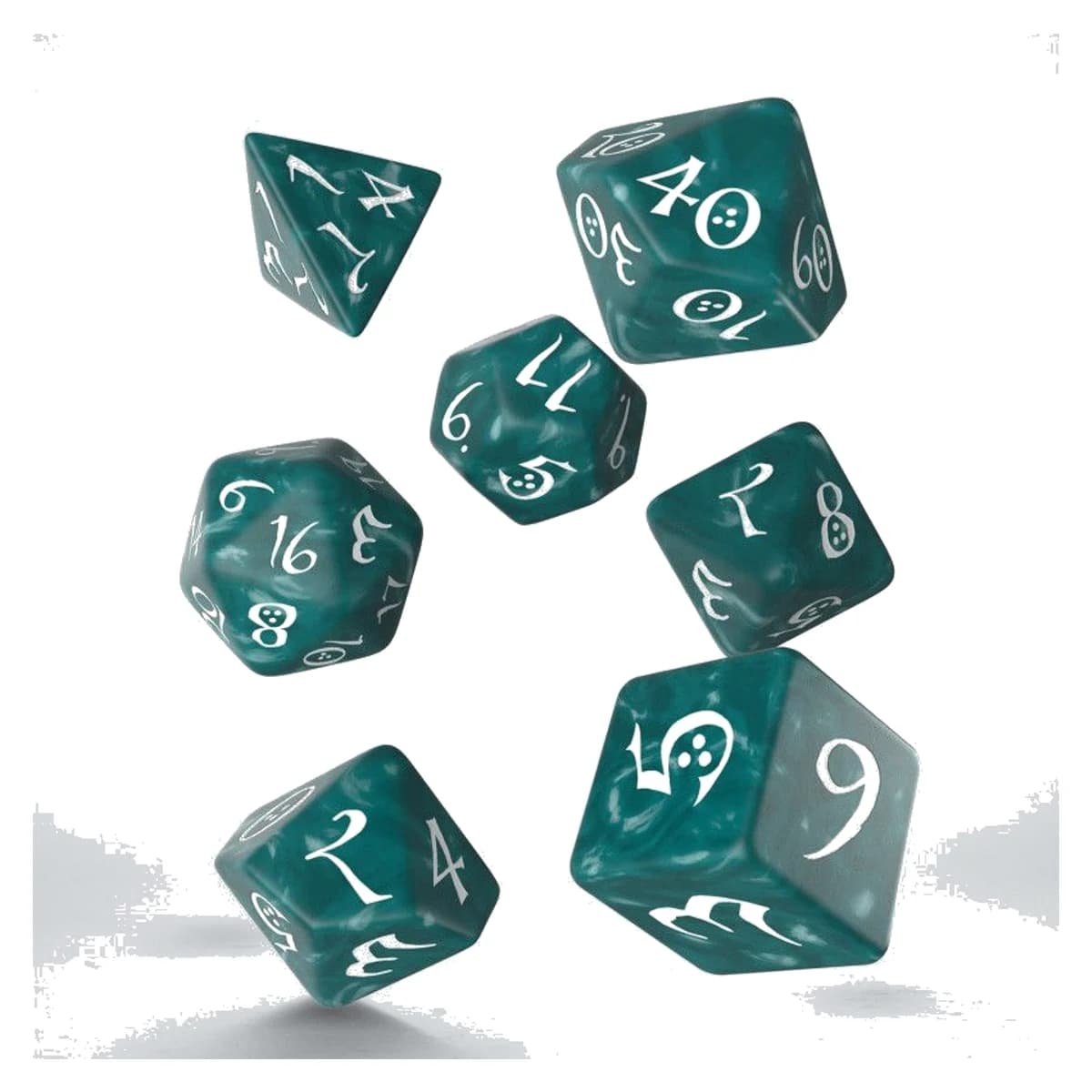
Engraved dice from a Polish maker known for heavily decorated designs.
Q Workshop are famous for carved designs where the numerals are part of an engraved pattern, and famous in the same breath for being hard to read. The Classic line is the answer to that: the same engraving quality with a numeral that is allowed to be a numeral. They also carry a lifetime guarantee, which nothing else at this price does.
SuitsWanting an engraved die rather than a painted one, without the readability tax.
The catchEverything else Q Workshop make earns the complaint. Reviewers land on the same phrase repeatedly, that the dice look nice and take time to read, and one review is blunt that the engraved designs mean spending time translating dice rather than playing.
What our tools do hereEngraving depth changes nothing about the odds and quite a lot about the reading. If a set is slowing your table down, the fix is a different set.
16.Haxtec metal set
7 dice
Tumbled edges
Around $20 to $30
The cheapest way to find out whether you actually like metal dice.
Zinc alloy dice with enamelled numerals, in a tin.
Metal dice are the most divisive thing in this hobby and this is the sensible entry point. They feel wonderful, they land with a satisfying weight, and a set costs less than half what the boutique metal makers charge. Buy this before buying anything expensive in metal, because a meaningful share of people discover they do not enjoy them at all.
SuitsFinding out whether the weight is the thing you have been missing.
The catchThey damage tables, and that is not a stray complaint. In a thread specifically about whether metal dice are any good, more than a quarter of the comments raised damage and nearly a quarter mentioned the table itself. They are also loud, and heavy enough that they stop rolling early.
What our tools do hereThe complaint that metal dice hardly roll is really a complaint about how few times a heavy die tumbles before it stops. Nothing fixes that except a tray, and the Dice Roller if the noise is the problem.
Weight varies far more than the listings suggest. Two metal sets sold as comparable list 107 g and 148 g per set, which is the difference between pleasant and unwieldy.
17.DNDND metal set
7 dice
Tumbled edges
Around $25 to $40
Heavier, prettier, and the same problems as every other metal set.
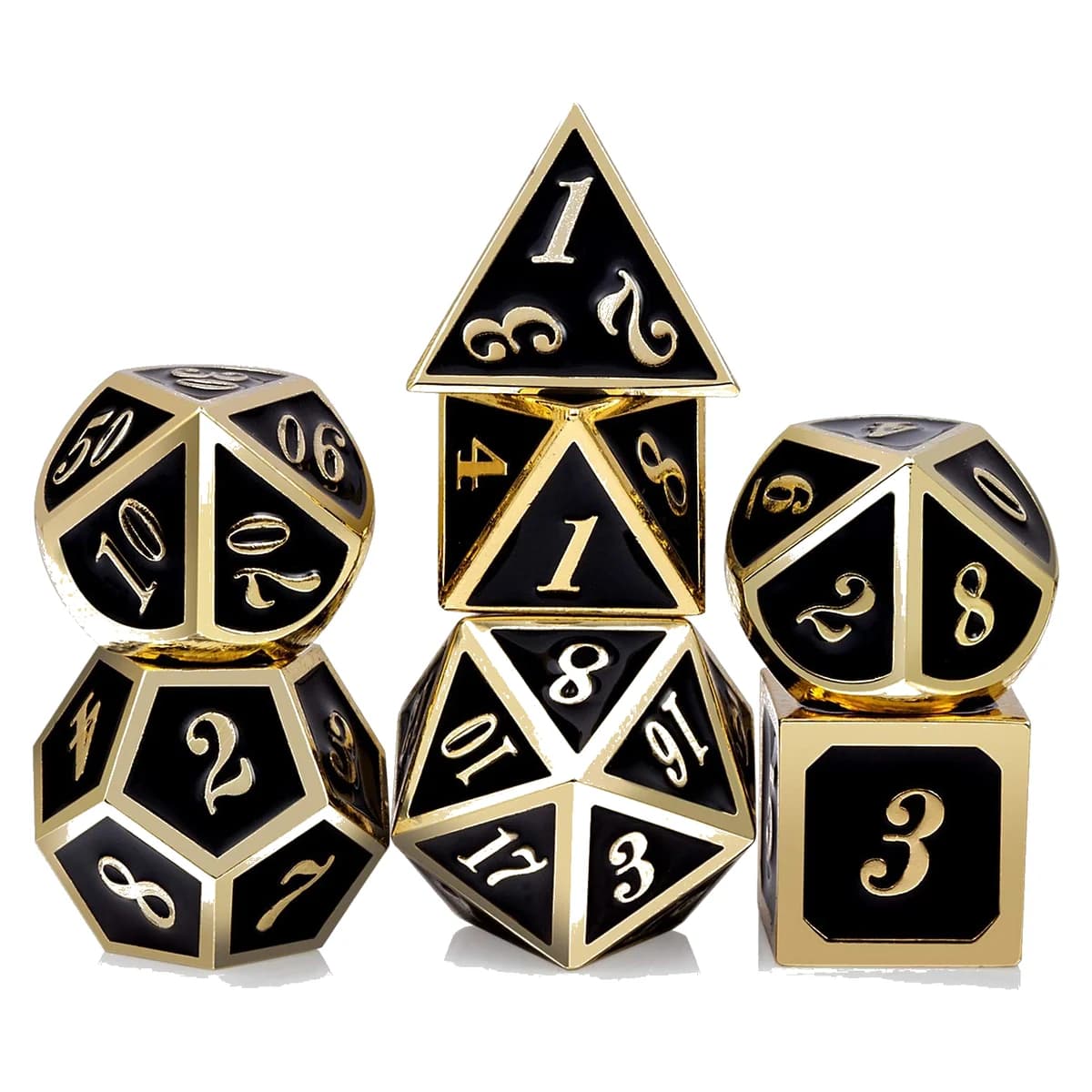
Metallic polyhedral dice with a gift box, sold in a lot of finishes.
A more finished version of the same idea, and the finishes are where it gets risky. The plain enamel colorways read fine. The antique and gunmetal ones put a dark numeral in a dark recess on a dark die, which looks superb in a photograph and is genuinely hard to read at arm's length.
SuitsSomebody who already knows they like metal dice and wants a nicer set of them.
The catchSame as every metal set here, plus one of its own: the darker finishes are the ones most people want and the ones hardest to read. Damage to tables, noise and short rolls all still apply.
What our tools do hereA heavy die that stops in two tumbles is doing less randomizing than a light one that bounces around, which is an argument for a tray rather than against metal. The Dice Roller sidesteps it.
18.AncientDeer hollow copper
7 dice
Tumbled edges
Around $30 to $50
Solves the metal dice weight problem and creates a new one.
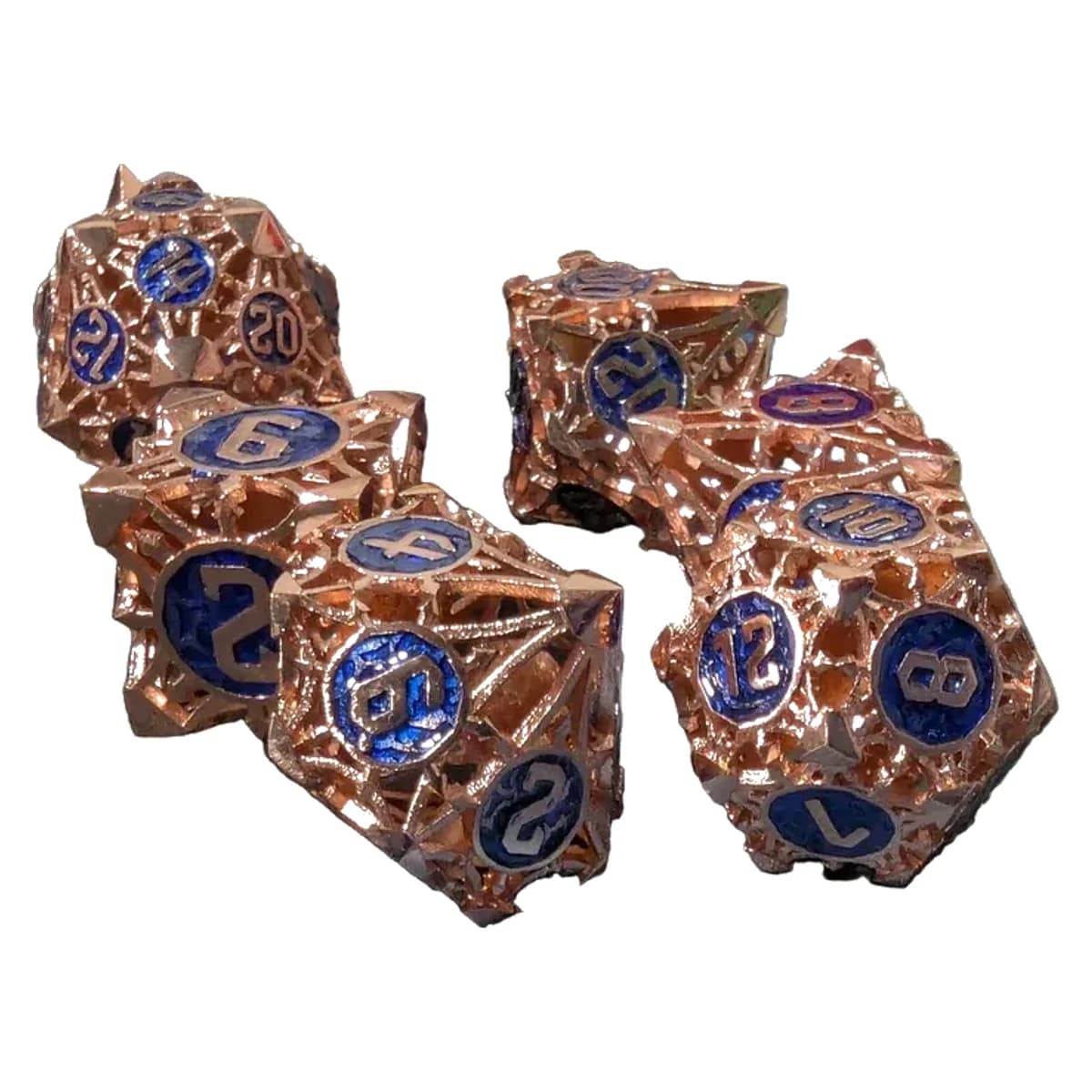
Copper dice cast hollow, so they weigh closer to plastic.
A genuinely clever response to the main complaint about metal dice. Hollowing them out drops the weight enough that they tumble properly and do less damage on landing, which addresses two of the three standard objections at once. Copper also ages, and whether that is a feature depends entirely on you.
SuitsLiking the look of metal and disliking everything about how metal dice roll.
The catchA hollow die is a deliberately asymmetric mass, which is the one thing on this page that a float test would flag instantly. It still does not matter in play, and it does mean this is the set where the fairness argument is least comfortable.
What our tools do hereThis is the clearest case on the page for the point the whole page makes. The imbalance is real and measurable and it costs you nothing, which the Dice Roller shows faster than an argument does.
The ones we would not buy
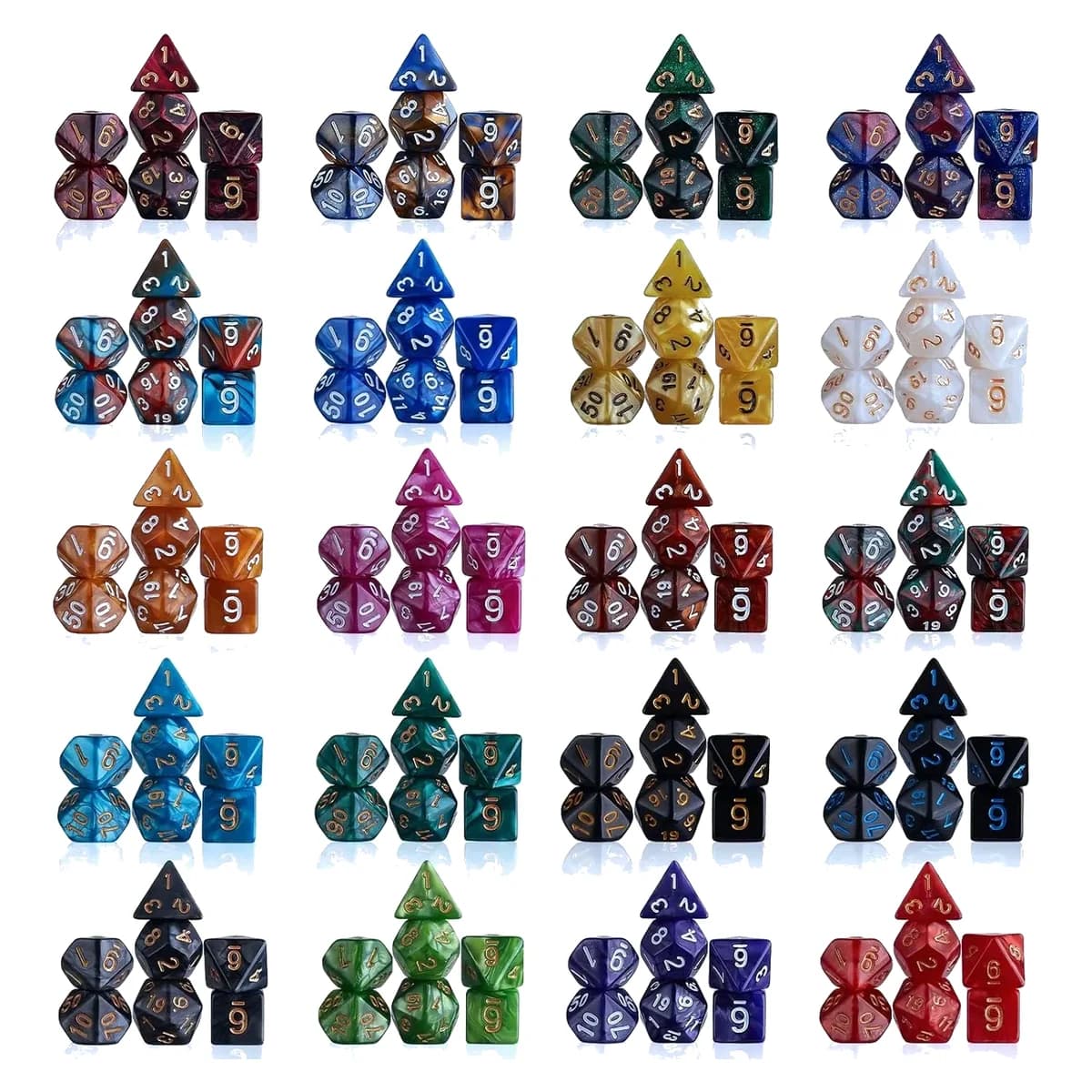
Popular, frequently recommended, and we would pass on all four. Three are bulk purchases that feel like value and are not. One is dice you cannot read.
19.Chessex Pound-O-Dice
About 80 to 100 dice
Mixed edges
Around $20 to $35
A pound of dice that Chessex themselves describe as seconds.
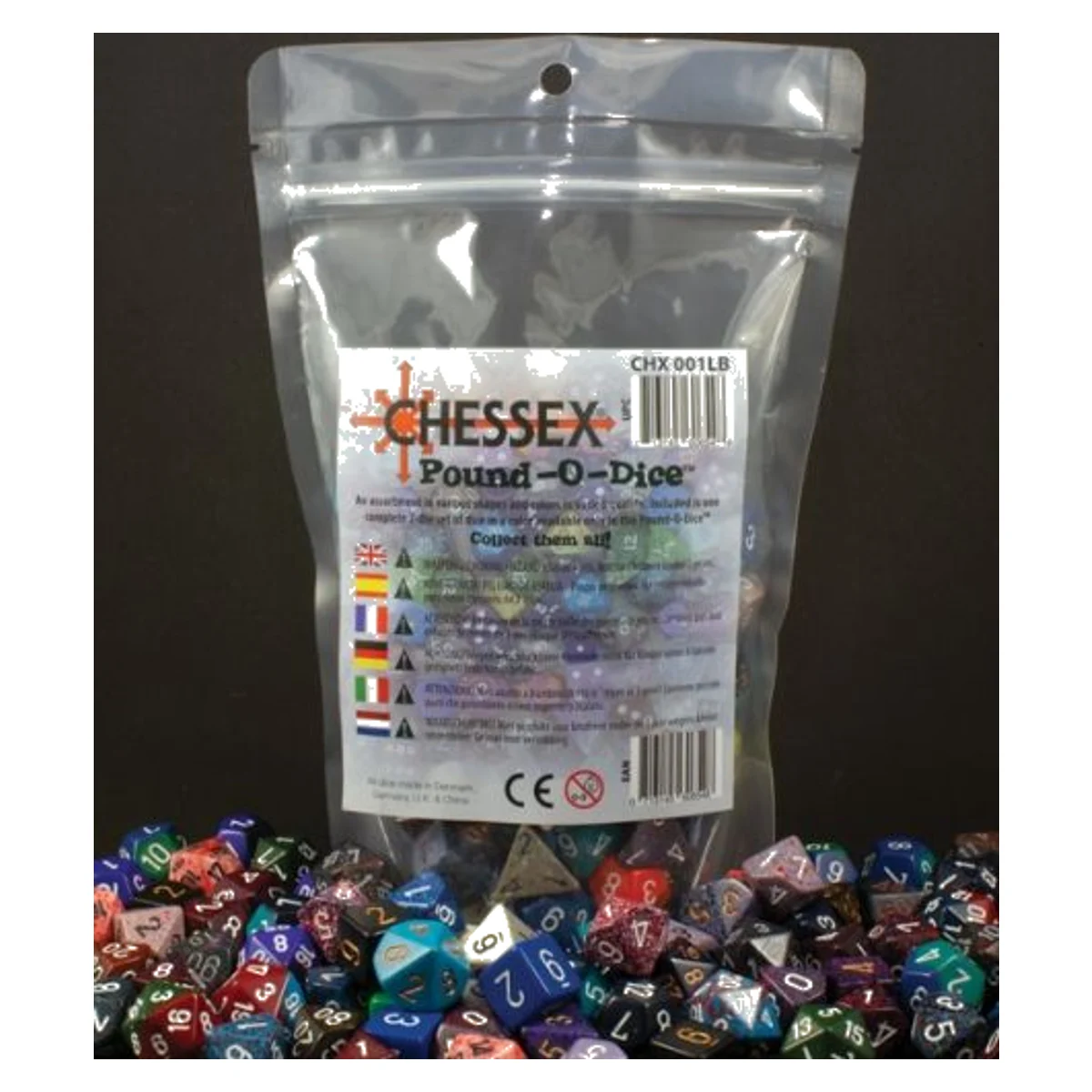
A bag of roughly 80 to 100 loose dice, sold by weight.
The famous purchase and the one we would talk you out of. Chessex describe the bag on their own store as a mix of first and second quality, and the Amazon listing says approximately 100 factory seconds outright. You are buying, deliberately, the dice that did not pass. That is a fine thing to do with your eyes open and it is not what most people think they are buying.
SuitsA games club that needs a pile of loose dice, or somebody who enjoys sorting.
The catchThey are seconds, which is the whole product. Beyond that it is loose dice with no complete sets in it beyond the one polyhedral set included, so you cannot hand anybody seven matching dice from a pound of them.
What our tools do hereIf the appeal is having a lot of dice available, a browser tab holds an unlimited number and sorts them for you.
Chessex sell a separate discounted factory-seconds range on their own site, listed as such, which makes the composition of this bag unambiguous rather than a rumor.
20.CiaraQ 182-piece bulk pack
182 dice
Tumbled edges
Around $25 to $40
Twenty-six sets you will use two of.
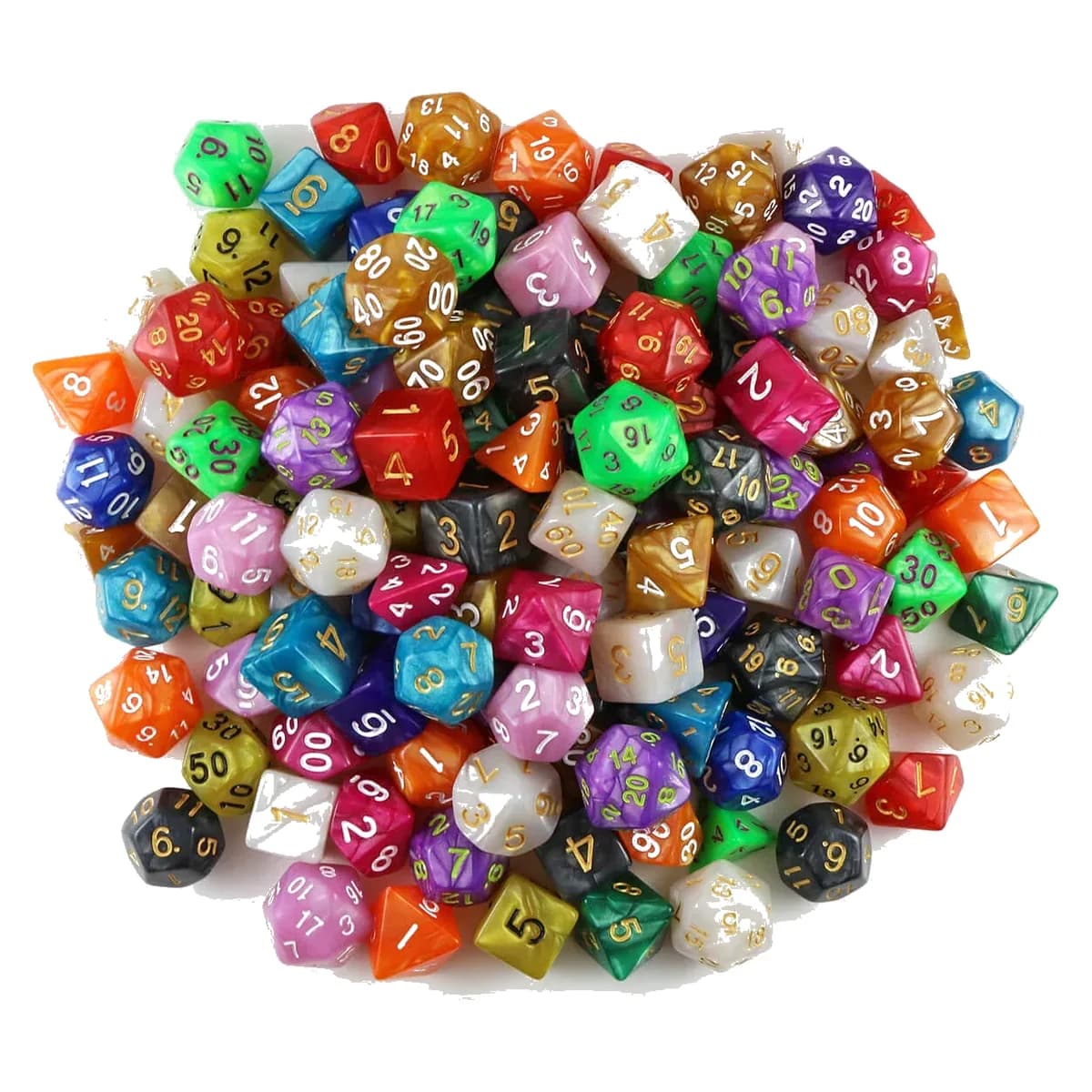
Twenty-six seven-die sets in assorted colors, boxed together.
This is the purchase that feels like value and is not. At around a dollar and a half a set the arithmetic is unarguable, and what arrives is twenty-six sets chosen by nobody, most of them in translucent colorways with light numerals that you will not enjoy reading. Buy three sets you picked instead.
SuitsRunning a club, a classroom, or a convention table where the dice are expected to walk off.
The catchYou do not choose any of the colors, and the assortment leans heavily on exactly the translucent and pearlescent finishes that are hardest to read. Most owners end up using two or three of the sets and storing the rest.
What our tools do hereBuying dice in bulk is usually about not wanting to run out. That is the one problem a browser tab solves completely.
21.175-piece assorted pack
175 dice
Tumbled edges
Around $20 to $35
The same idea again, from whichever brand is cheapest this week.
Twenty-five seven-die sets in a pouch, sold under rotating brand names.
Functionally the same product as the pack above and worth listing separately only because these listings change hands constantly. The brand on the box is not stable, the supplier is not stable, and the photograph is frequently older than the contents. Nothing here is a scam and none of it is chosen.
SuitsThe same club-and-convention case, if it is cheaper than the alternative on the day.
The catchYou cannot buy the same thing twice. A listing like this is a rotating stock item, so the set your friend recommends is often no longer what ships, which makes any specific recommendation worthless within months.
What our tools do hereA hundred and seventy-five dice weigh about half a kilogram and take up a shoebox. The Dice Roller weighs nothing.
22.Miniature 10mm dice sets
Several 7-die sets
Tumbled edges
Around $25 to $40
Small dice for people who have run out of reasons to buy more dice.
Half-size polyhedral sets, sold as a collection.
Genuinely charming objects and bad dice. Every readability problem on this page gets worse when the numeral is half the size, and 10mm dice fail the five-feet test at about two. They are for a collection or a travel tin, not for the table you actually play at.
SuitsA collector, or a travel kit where the space genuinely matters.
The catchYou cannot read them, and a small sharp d4 on a carpet is gone. This is the only set on the page we would rate poor for readability without qualification.
What our tools do hereA travel kit is the case where a phone browser wins outright, and the Dice Roller needs no tin and loses no d4 under a car seat.
Free, and genuinely fine
Because the honest answer to "which dice should I buy" is often that you already have some.
23.The dice you already own
The ones you own
Mixed edges
Nothing
The honest answer for most people reading a page like this.
The set in the bag, or the d6 out of a board game in the cupboard.
Most people arriving at a page about buying dice already own dice, and the reason they are shopping is a run of bad luck rather than a problem with the equipment. Nothing on this page will change your rolls. If you can read your current dice from where you sit, they are doing their job and the money is better spent on almost anything else.
SuitsAnyone whose dice are currently fine and who is here because of a bad session.
The catchGenuinely none, unless you cannot read them, in which case that is the reason to replace them and the only reason on this page that we would call urgent.
What our tools do hereBefore spending anything, roll the d20 you already have a few hundred times in the Dice Roller alongside it. A fair die produces runs that look cursed, and seeing that is usually cheaper than a new set.
24.Blank dice you write yourself
55 dice
Tumbled edges
Around $8 to $14
Not a dice set, and the answer to a question the others cannot touch.
Unmarked plastic dice sold in bulk, for writing your own faces on.
Here for a different job than everything above it. Nothing in a normal set gives you a die with six words on it, and a homemade table of results beats rolling a d6 and looking up a chart every time. The cost is trivial and the use case is real, which is more than several of the sets we have just spent paragraphs on can say.
SuitsAnyone running a game and tired of consulting the same small table for the tenth time.
The catchYou have to make them, your handwriting is on them permanently, and marker rubs off with handling unless you seal it. A printed die this is not.
What our tools do hereA custom die is exactly what the Dice Roller does without a marker: build a set with the sides you want and roll it, which is also how to find out whether the table you designed is any good before you write it on plastic.